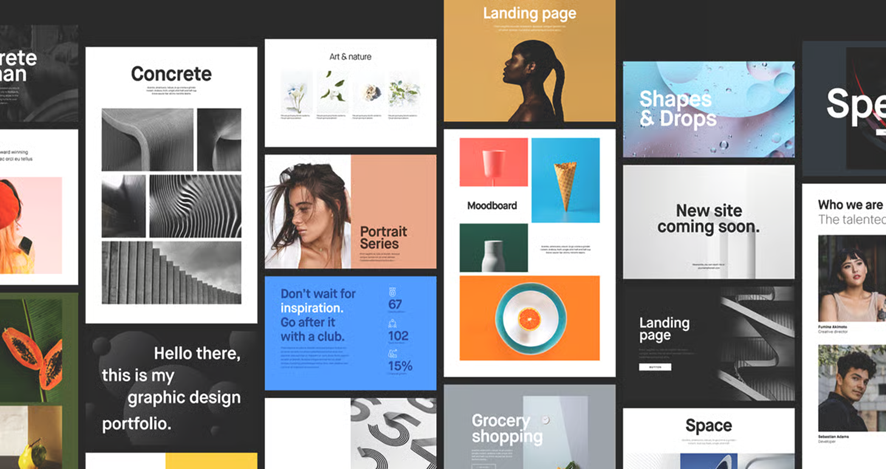
 Image: Semplice.
Introduction
One of the biggest mistakes when starting out in graphic design is to think that the most important thing is to master the tools. However, in today’s professional environment, what really makes the difference is the ability to present one’s work clearly, coherently and strategically (Meth et al., 2020).
A portfolio is not merely a collection of projects, but a communication tool that reflects how a designer thinks, how they solve problems, and what their professional identity is. In many cases, it is the primary criterion for assessment in recruitment processes within the creative sector (Heller & Vienne, 2015).
What a portfolio really is (and what it isn’t)
A portfolio is not simply a collection of work or a file of exercises without context. It is a carefully curated selection that demonstrates skills, judgement and professional positioning.
As Meyers (2017) points out, an effective portfolio should not focus solely on showcasing final results, but rather on presenting the work in a clear and structured manner. In this regard, Shaughnessy (2010) notes that one of the most common mistakes is to confuse quantity with quality, when in fact selection is the key factor.
The portfolio should therefore be seen as a visual narrative, not as a collection of isolated pieces.
The portfolio as a tool for professional identity
The portfolio serves a strategic purpose: to position the designer within the professional market (Barnes et al., 2022).
It is not just about showcasing what has been achieved, but about setting a direction for the future. In this sense, the portfolio is directly linked to the development of one’s professional identity.
As Costa (2008) points out, an image is not merely a representation, but a phenomenon that constructs meaning. Applied to the portfolio, this implies that every decision—from the projects included to their presentation—helps to define how the designer is perceived.
What projects to include in a graphic design portfolio
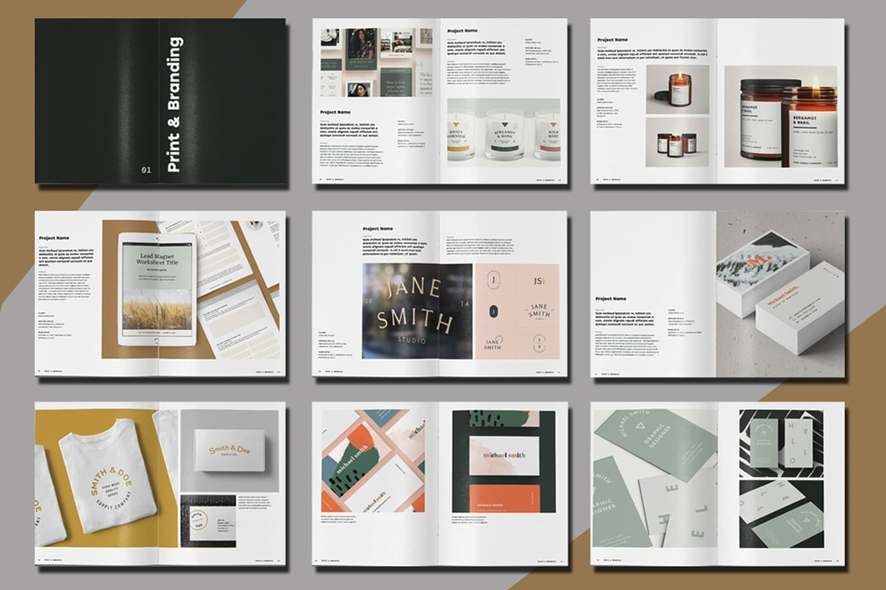 Image: Adobe Stock.
In the early stages, it is not essential to have actual clients. What matters is demonstrating analytical skills, conceptual development and visual coherence.
It is recommended to include projects that demonstrate:
• Creative thinking
• Problem-solving
• Development of visual systems
According to Meyers (2017), the most effective portfolios are those that showcase well-developed projects, even if they are fictional, provided they are rigorously constructed.
This reinforces the idea that a portfolio does not document experience, but rather ability.
The importance of the process: thinking like a designer
One of the most highly valued aspects of a portfolio is the ability to showcase the design process.
Beyond the final result, it is essential to highlight how it was achieved: the context, the decisions, the evidence and the project’s development.
Norman (2013) argues that design should focus on understanding the problem before solving it. Applied to the portfolio, this approach implies that the process is just as important as the outcome.
Presenting this process helps to understand the designer’s thinking and adds depth to the work on display.
How to structure a project within a portfolio
Clarity in the presentation is essential.
A project should be structured in such a way as to make it easy to understand, including its context, objective, implementation and outcome.
Krug (2014) points out that any visual system must be intuitive and easy to interpret. In the case of a portfolio, this means a clear presentation, free from unnecessary elements and excessive complexity.
The structure not only organises the information, but also enhances the experience of those assessing the work.
Common mistakes when creating a portfolio
There are recurring mistakes that affect the quality of the portfolio.
One of the most common mistakes is to focus solely on aesthetics without justifying design choices. Another frequent mistake is to include too many projects without any clear criteria, which leads to a lack of coherence.
It is also common for work to be presented without any context, making it difficult to interpret.
As Best (2017) points out, the presentation of creative work is just as important as its development, as it directly influences how it is assessed.
Portfolio formats: digital, physical and platforms
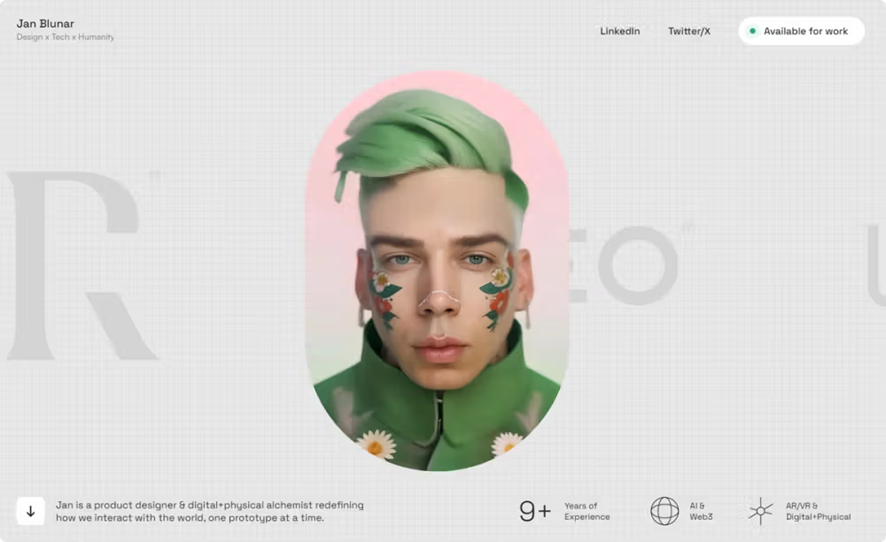 Image: Jan Blunar.
The digital portfolio has established itself as the primary format in the professional sphere.
Currently, the most commonly used options include personal websites and specialist platforms. In this context, the design of the portfolio itself becomes an exercise in user experience.
Current tools and resources, such as those proposed by Adobe (2022), emphasise the importance of structuring content in a clear and accessible way, making it easier to navigate and understand the work.
How to make your portfolio stand out
Standing out isn’t about showing more, but about communicating better.
An effective portfolio is characterised by its coherence, clarity and ability to synthesise. It is not about including every piece of work, but rather those that build a strong narrative.
Shaughnessy (2010) points out that a portfolio should be a selective and strategic tool, designed to showcase the kind of work the designer wishes to undertake in the future.
The portfolio as an ongoing process
A portfolio is not a static document, but a constantly evolving process.
As a designer improves, their portfolio should be updated, removing work that no longer reflects their current standard.
This review process helps to maintain a consistent and up-to-date professional image, reinforcing the designer’s identity over time.
Conclusion
A portfolio is a key tool in a graphic designer’s professional development. It not only allows them to showcase their work, but also to articulate their own identity.
Learning how to select, structure and communicate projects is part of the training process. In a competitive environment, the ability to present one’s own work clearly and with strategic insight becomes a key differentiator.
References
Adobe. (2022). 5 consejos claves para crear tu portafolio de diseño. (5 key tips for creating your design portfolio).
https://blog.adobe.com/es/publish/2022/11/11/5-consejos-claves-para-crear-tu-portafolio-de-diseno
Barnes, C., Wragg, N., Fisher, E., Tyagi, S. and de Kruiff, A. (2022), Portfolio Literacy and the Transition to Work for Graphic Design Graduates. Int J Art Des Educ, 2(41), 300-319.
https://doi.org/10.1111/jade.12407
Best, K. (2017). The fundamentals of design management. Bloomsbury Visual Arts.
Costa, J. (2008). La imagen de marca: un fenómeno social. (Brand image: a social phenomenon). Paidós.
Heller, S., & Vienne, V. (2015). Becoming a Graphic and Digital Designer: A Guide to Careers in Design. Wiley.
Krug, S. (2014). Don’t make me think (3rd ed.). New Riders.
Meth, D., Finger, M., and Brough, D. (2020) The Graduate Professional Portfolio as “synergy tool”: navigating the complex role of portfolios in future-focused design education, in Boess, S., Cheung, M. and Cain, R. (eds.), Synergy - DRS International Conference 2020, 11-14 August, Held online. https://doi.org/10.21606/drs.2020.317
Meyers, D. R. (2017). The graphic designer’s guide to portfolio design (2nd ed.). Wiley.
Norman, D. A. (2013). The design of everyday things. Basic Books.
Shaughnessy, A. (2010). How to be a graphic designer without losing your soul. Laurence King.
SEO recommendations:
Main keywords: graphic design portfolio, how to create a graphic design portfolio, graphic designer portfolio, graphic design portfolio examples, create a graphic design portfolio.
Secondary keywords: how to create a creative portfolio, graphic design portfolios for students, graphic design portfolios for those with no experience, how to present design projects, professional design portfolio.
At a strategic content level: professional identity as a designer, personal brand as a graphic designer, visual narrative in a portfolio, the design process in a portfolio, storytelling in design.
Technical keywords: design portfolio, web design portfolio, creative digital portfolio, user experience portfolio.
Key search terms: studying graphic design portfolios, portfolios for getting into graphic design, how to get into graphic design, graphic design entry requirements.
Sara Escudero